Fort Chambers / Poor Farm Site Planning
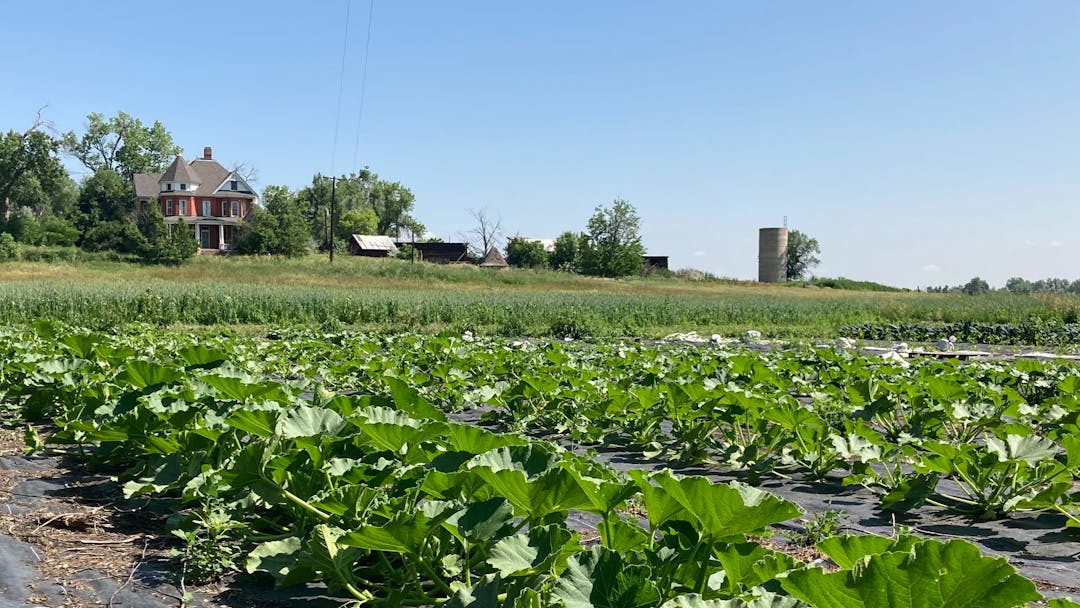
The City of Boulder is collaborating with Tribal Representatives and seeking input from community members to design an interpretive experience at the Fort Chambers / Poor Farm site. The interpretive experience will share the history surrounding the site and provide spaces for learning and reflection.
The 113-acre Fort Chambers/Poor Farm property is historically significant due to its ties to the Sand Creek Massacre and is also rich in ecological and agricultural value. Detailed information about the site’s background can be found on the Fort Chambers / Poor Farm Site Information Story Map.
The City of Boulder is currently refining the Draft Interpretive Framework, which identifies draft design concepts for and narrative focus of the proposed 'Healing Trail', a key element of the Concept Plan developed with Arapaho and Cheyenne Tribal Representatives in 2024.
This phase of the project builds on previous community input, where community members shared their opinions on interpretation methods and helped determine which ideas, stories, and themes were most important to be featured along the planned interpretive trail. More information about this project's process and previous engagement is available on the Fort Chambers / Poor Farm project webpage.
Thank you to everyone who provided input during this phase of the project.
The City of Boulder is collaborating with Tribal Representatives and seeking input from community members to design an interpretive experience at the Fort Chambers / Poor Farm site. The interpretive experience will share the history surrounding the site and provide spaces for learning and reflection.
The 113-acre Fort Chambers/Poor Farm property is historically significant due to its ties to the Sand Creek Massacre and is also rich in ecological and agricultural value. Detailed information about the site’s background can be found on the Fort Chambers / Poor Farm Site Information Story Map.
The City of Boulder is currently refining the Draft Interpretive Framework, which identifies draft design concepts for and narrative focus of the proposed 'Healing Trail', a key element of the Concept Plan developed with Arapaho and Cheyenne Tribal Representatives in 2024.
This phase of the project builds on previous community input, where community members shared their opinions on interpretation methods and helped determine which ideas, stories, and themes were most important to be featured along the planned interpretive trail. More information about this project's process and previous engagement is available on the Fort Chambers / Poor Farm project webpage.
Thank you to everyone who provided input during this phase of the project.
Share Your Fort Chambers / Poor Farm Story:
In order to share your idea or story, start below by adding a title. Full text formatting is available, and you are able to share links, images and videos by clicking on the icons shown here:
Old photographs, diary entries, and historical writings are also welcomed to help us broaden our understanding of Boulder’s history and the land. |
The goal of this exercise is to understand what teachings and experiences people desire for the new Healing Trail. All submissions should be relevant to the history or context of the area and acceptable for sharing publicly. No threats, forms of intimidation, obscenities or racial epithets will be accepted (historic, primary sources excepted). Unacceptable responses will be rejected (you will be invited to revise your submission and resubmit following these guidelines). |
If you are interested in sharing general feedback about this project or the design process, please use the Comment Form instead of this webpage. Questions or concerns can be directed to the Fort Chambers / Poor Farm project team, whose contact information is located on the top-right of this page. |

Thank you for sharing your story with us.
-
Share All History Matters on Facebook Share All History Matters on X (formerly Twitter) Share All History Matters on Linkedin Email All History Matters link
All History Matters
over 1 year agoPosted on behalf of Carol Affleck and Shirley Schaller:
"We envision a healing trail on the southern portion of the property as shown on your drawing map. The trail should be a truthful timeline of events, with interpretive signage for both the Tribes and the Settler/Homesteaders. Native and prairie plants might be included along the trail.
Address what other troops from where in Colorado participated in Sand Creek. There was no battle at Fort Chambers. The settlers built the sod fort for safe shelter as evidenced in oral histories, prior to the troops training at the fort for 20 days... Continue reading
Posted on behalf of Carol Affleck and Shirley Schaller:
"We envision a healing trail on the southern portion of the property as shown on your drawing map. The trail should be a truthful timeline of events, with interpretive signage for both the Tribes and the Settler/Homesteaders. Native and prairie plants might be included along the trail.
Address what other troops from where in Colorado participated in Sand Creek. There was no battle at Fort Chambers. The settlers built the sod fort for safe shelter as evidenced in oral histories, prior to the troops training at the fort for 20 days. The settlers went to the fort for and stayed for safe shelter.
We do not support a recreation of Fort Chambers. The exact location of the fort is unknown.
The agricultural hay field and the historic Chambers/Williams/Poor Farm house and all of the historic farm structures must be restored to the Secretary of Interior’s standards.
The significant intact farm complex should be maintained and honored as a Heritage Agriculture museum site.
The marker must be returned. It is listed on the National Register of Historic Places, along with the buildings and features.
Stewardship of the entire property is highly critical. The house has been vandalized. A caretaker should be living in the upstairs back apartment. Farming activities should be continued. The hayfield must be irrigated. The gardens should be restored. The lawn must be watered and mowed. The historic plantings of roses, lilacs, iris, flowers and the mulberry tree and other trees must be watered and maintained.
Inexperienced people have suggested animals should be returned to the farm, including buffalo. Animals must be tended, watered, fed. An trained onsite caretaker would be necessary to tend animals. Buffalo and animals eat a lot. Overgrazing? Where would the extra necessary feed come from?
Security and liability are important issues. Security for the site and buildings. Liability for visitors walking and hiking the trails, near water, wildlife, snakes and more.
As Valmont descendants we have a history to share. Our history must be told and respected.
The hate directed at the settlers and their descendants in public meetings and otherwise, must stop. We need respect. False, incorrect and incomplete information must be refuted.
We respect the Tribal history.
All history matters. All history must be told with truth.
We look forward with excitement to participating in the public input process. We want to share our true story.
Respectfully,
Carol Affleck
Shirley Schaller
One further point – we do not support the renaming of the site. History of everything matters."
-
Share Comments from Iayana - What Happened, How Did We Get Here on Facebook Share Comments from Iayana - What Happened, How Did We Get Here on X (formerly Twitter) Share Comments from Iayana - What Happened, How Did We Get Here on Linkedin Email Comments from Iayana - What Happened, How Did We Get Here link
Comments from Iayana - What Happened, How Did We Get Here
over 1 year agoPosted on behalf of Iayana:
"First -- i think Ava Hamilton's question at Ernest's excellent workshop (Thank You, City ) deserves full focused consideration and deliberation. I know this is hard to hear. She asked why a healing trail would be designed to be at the Fort. A multitude of Indigenous people, including many who unlike Ava are not direct descendents of Leaders massacred in 1864, have explicitly stated their wish to not go near the Fort Chambers site where people trained to kill their relatives.
It seems impractical to have the place where men trained for the massacre serve... Continue reading
Posted on behalf of Iayana:
"First -- i think Ava Hamilton's question at Ernest's excellent workshop (Thank You, City ) deserves full focused consideration and deliberation. I know this is hard to hear. She asked why a healing trail would be designed to be at the Fort. A multitude of Indigenous people, including many who unlike Ava are not direct descendents of Leaders massacred in 1864, have explicitly stated their wish to not go near the Fort Chambers site where people trained to kill their relatives.
It seems impractical to have the place where men trained for the massacre serve as a place of both education and "healing." The education - the historical facts - is traumatising. One cannot be traumatised, reflect, and heal in the same moment. And one cannot "heal" in a real way unless dealing with actuality. If a Healing Trail were elsewhere on a beautiful Valley spot, settler and Original Inhabitant descendants might both eventually walk there - maybe.
It seems important to have a full educational, revelatory and perhaps corrective experience at Fort Chambers, but this may not be the spot for a healing trail. This really has to be honestly deliberated by all parties involved.
Things I think should be at Fort Chambers that i don't see much of around me yet: You are probably up on all these but here goes:
1. John Evans/(Territorial government involvement):
a) In 2022 before the October Re-membering at the Dairy, there was a state archive website with language literally describing Evans in terms of "Glory". This should be in a display educating people about the accepted patterns of earlier settler society; as with the marker at the Fort that Fred says to put back but with corrections also shown, this record should be kept, and at the same time corrected. Today i found a more recent entry that is at best ambiguous about Evans. This should also be revised. You will know these records much better than i.
b) Caroline Goodwin's poem "I Will Not Say", that she read at the Re-membering, should have a special PLAQUE, with her identity as Evans' great-great granddaughter and the signatories other family members highlighted. She has just confirmed her pleasure and approval re. this submittal suggestion.
c) Denver University John Evans Study Committee Report full text. https://www.du.edu/news/john-evans-study-committee-report
2. County Involvement per se:
I have not seen a statement from the County acknowledging its historical involvement in the massacre. I was not an official historian for the Re-membering, and it was only AFTER the event that i found out on the Carnegie website that George W. Chambers was a COUNTY COMMISSIONER at the time of the massacre!!! Not a random farmer as I had been told : ). This is highly significant. Today on state archives I found more crucial names. Nichols was the County Sherrif and stepped down to be in the regiment. All this governmental involvement needs to be clearly covered at the site.
3. Morse Coffin's published letter excerpt: Attached is the excerpt I sent Katie last year. It gives a clear image of attitudinal societal norms at the time of SCM.
4. Maybe even include the rough tape of the Re-membering at the Dairy that is on the City website? But please not until the credit and name-spelling mistakes at the end have been corrected and the Arapaho and Cheyenne translations of the Songs added, which Fred approved. I was in medical extremis when that tape was sent to the City and have not yet been able to get it fixed.
5. Christian Churches input: including the Methodist church whose minister participated in the Christian Lament in the Re-membering. (Chivington being a Methodist pastor). Maybe another crucial one will come forth in the future with a bit more attention.
6. Full text of Soule's and Cramer's letters to Wynkoop.
7. Again, let me iterate the importance of the ironic and seminal connection between the desecration site of Fort Chambers and the sacred site of Valmont Butte...all on historically the same land. The Valmont Butte site has erroneously been seen by some as an Indigenous decisional site - fortunately the EPA is currently recognizing settler responsibility at that site and is demanding coal ash cleanup. Fort Chambers site needs to acknowledge this extraordinary temporal and spatial juxtapostion of genocide and sacred praxis on the landscape.
8. The Founding Peoples of this region need to be acknowledged in City Charter and at the Fort and their story told up to the present, as Paula noted, including the hoped-for imminent return of some descendants. This would include reference to Utes whose presence has been documented up to 1200-2000 years ago."
-
Share I didn’t know. Why? on Facebook Share I didn’t know. Why? on X (formerly Twitter) Share I didn’t know. Why? on Linkedin Email I didn’t know. Why? link
I didn’t know. Why?
by Jerilyn , over 1 year agoMy Story about Fort Chambers is that I’ve lived in Boulder since 1984 and I didn’t learn the story of Fort Chambers until the City acquired it in 2019. Then what I saw was a monument that was a monumental lie. Being a tribal member i was aware of and used to this kind of display of ignorance. It was, and in many, but thankfully fewer places, is common where Indians are concerned. Still, it strung because it felt willful and so wrong and out of place and time in 2019.
I think most people in Boulder would say they... Continue readingMy Story about Fort Chambers is that I’ve lived in Boulder since 1984 and I didn’t learn the story of Fort Chambers until the City acquired it in 2019. Then what I saw was a monument that was a monumental lie. Being a tribal member i was aware of and used to this kind of display of ignorance. It was, and in many, but thankfully fewer places, is common where Indians are concerned. Still, it strung because it felt willful and so wrong and out of place and time in 2019.
I think most people in Boulder would say they don’t know the Fort Chambers story. That means in important ways, we don’t know ourselves. It’s time to figure out who we are and decide who we want to be. -
Share What Happened, How Did We Get Here continued on Facebook Share What Happened, How Did We Get Here continued on X (formerly Twitter) Share What Happened, How Did We Get Here continued on Linkedin Email What Happened, How Did We Get Here continued link
What Happened, How Did We Get Here continued
by Iayana, over 1 year agoThe Battle at Sand Creek
Written by Morse H. Coffin in a series of articles to the Colorado Sun, 1879. Excerpt only.
“I now desire to mention a few things in order to make plain the general opinion among the people at that time regarding Indian killing, and thus account in some degree for the scalping indulged in at Sand Creek, and which is now condemned by many good persons. At the time the 3d Colorado regiment was raised, the idea was very general that a war of extermination should be waged; that neither sex nor age should be spared... Continue reading
The Battle at Sand Creek
Written by Morse H. Coffin in a series of articles to the Colorado Sun, 1879. Excerpt only.
“I now desire to mention a few things in order to make plain the general opinion among the people at that time regarding Indian killing, and thus account in some degree for the scalping indulged in at Sand Creek, and which is now condemned by many good persons. At the time the 3d Colorado regiment was raised, the idea was very general that a war of extermination should be waged; that neither sex nor age should be spared; and women held to these views in common with men, and it is my opinion that as great a per cent of the latter as the former held this view; and one often heard the expression that “nits make lice, make a clean thing of it.” Of course there were some exceptions, as I mentioned in my former letter, but that such exceptions were a weak minority must be well known by most residents of Colorado at that time. I propose to show that both officers and soldiers but carried out the general sentiment of the country; and let each bear their share of blame if any attach to what was done; for I wish it understood that Colorado soldiers fourteen years ago were not bloodthirsty and cruel above all men who then lived, though a few of us did not agree with the majority as to some things.” Morse H. Coffin.
ICP RPC Coffin Quote EXCERPT
“I now desire to mention a few things in order to make plain the general opinion among the people at that time regarding Sand Creek (Massacre),..At the time the 3rd Colorado regiment was raised, the idea was very general that a war of extermination should be waged; that neither sex nor age should be spared; and women held to these views in common with men. Of course there were some exceptions, but that such exceptions were a weak minority must be well known by most residents of Colorado at that time. ... both officers and soldiers but carried out the general sentiment of the country; ...I wish it understood that Colorado soldiers fourteen years ago were not bloodthirsty and cruel above all men who then lived, though a few of us did not agree with the majority as to some things.”
Morse H. Coffin, Colorado Sun, 1879.
ICP RPC Coffin Quote EXCERPT
-
Share The ideal opportunity to connect a myriad of Colorado indigenous stories and reckon with the past on Facebook Share The ideal opportunity to connect a myriad of Colorado indigenous stories and reckon with the past on X (formerly Twitter) Share The ideal opportunity to connect a myriad of Colorado indigenous stories and reckon with the past on Linkedin Email The ideal opportunity to connect a myriad of Colorado indigenous stories and reckon with the past link
The ideal opportunity to connect a myriad of Colorado indigenous stories and reckon with the past
by PMcEntee, over 1 year agoWith the exception of the Ute, Colorado/the Federal Government is neglectful in ever having provided trust land in the form of reservations to the native peoples who historically frequented these lands of CO. There are stories and histories intertwined with native peoples and homesteaders, and yet, even after the Sand Creek Massacre, lands that were given to descendants for reparations, were eventually transferred to whites who married into the families of the Cheyenne and Arapaho. Historic Boggsville in Las Animas is an example of this, but there are many more stories and also many we have never heard because we... Continue reading
With the exception of the Ute, Colorado/the Federal Government is neglectful in ever having provided trust land in the form of reservations to the native peoples who historically frequented these lands of CO. There are stories and histories intertwined with native peoples and homesteaders, and yet, even after the Sand Creek Massacre, lands that were given to descendants for reparations, were eventually transferred to whites who married into the families of the Cheyenne and Arapaho. Historic Boggsville in Las Animas is an example of this, but there are many more stories and also many we have never heard because we have not made the effort to build trust and provide authentic avenues for relationships with native peoples. From the naming of peaks such as Mount Blue Sky, which was only renamed from Mount Evans (the CO Governor who sanctioned the massacre) fairly recently, to the fact that Boulder County and its municipalities has only invested in telling the stories of homesteaders and mining history, we have a long road to creating trust and making the space, both literally and figuratively, to bring native voices to the storytelling process, should they desire it. That should be the focus of this effort- we have celebrated the Homesteaders enough. This should be the catalyst for sharing a broader history of land that can only be shared authentically by native people.
-
Share Reflections on 3/21 Fort Chambers Concept Meeting on Facebook Share Reflections on 3/21 Fort Chambers Concept Meeting on X (formerly Twitter) Share Reflections on 3/21 Fort Chambers Concept Meeting on Linkedin Email Reflections on 3/21 Fort Chambers Concept Meeting link
Reflections on 3/21 Fort Chambers Concept Meeting
by jhouston, over 1 year agoWe are deeply embedded in Native community here through found family, friendship, ceremony, and a collective effort to unforget the true history of the land and people here in the context of vitalizing an Indigenous future. We attended the March 21st concept meeting to better understand how the Boulder community sees this process. After multiple follow up conversations to sort out my thinking, I want to share some of my personal reflections:
- There was one comment to “not forget the white story”. In the recounting of this history, there is no white vs Native story. There is one story and... Continue reading
We are deeply embedded in Native community here through found family, friendship, ceremony, and a collective effort to unforget the true history of the land and people here in the context of vitalizing an Indigenous future. We attended the March 21st concept meeting to better understand how the Boulder community sees this process. After multiple follow up conversations to sort out my thinking, I want to share some of my personal reflections:
- There was one comment to “not forget the white story”. In the recounting of this history, there is no white vs Native story. There is one story and that includes the truth of all that happened. It’s everyone’s story. This comment illuminates a problematic dynamic I’ve seen elsewhere in related conversations that usually means more precisely “don’t forget the White perspective”. It’s hard to forget the White perspective … it’s been the dominate perspective here since White people first invaded Colorado. And it’s not only often incomplete but untrue. I am not advocating for a biased shift in any other direction … simply the full truth and from an honest perspective.
- Calling it a “Healing Trail” is incredibly problematic and an example of the deeply embedded White supremacies in our community. Healing who and how? I won’t speak for any Native person living here, especially one with ancestors and relatives directly affected by the Sand Creek Massacre, but I will attempt to amplify the voices I’ve heard. Before healing, we need remembrance and restoration of the truth. And this includes those of us who have benefitted directly or Indirectly from such atrocities unpacking our connections and how we got here, and then doing the work to understand personal accountability and commit to revoking unjust privilege with a goal of restoration, reparations, and reconciliation. I believe we need at least all of that before we can heal.
- I also saw comments requesting a celebration of things like organic agriculture being or have been done on this land. While an issue of vital importance in this day and age of industrialized food (and I worked as an advocate for small farms and local foods, including organic, regenerative, ethical, etc. food systems, for over a decade) this does not seem the place for all that. It is clear to me that by far the most important thing to deal with here is this land’s relationship to one of the worst atrocities in US history. There are plenty of other opportunities to talk about our food systems (and some of the other similar comments I saw) that do not dilute and attempt (intentionally or unintentionally) to erase the most important aspects of its history.
Thank you for listening.
-
Share Please, please, please stop calling this a "Healing Trail" on Facebook Share Please, please, please stop calling this a "Healing Trail" on X (formerly Twitter) Share Please, please, please stop calling this a "Healing Trail" on Linkedin Email Please, please, please stop calling this a "Healing Trail" link
Please, please, please stop calling this a "Healing Trail"
by Dewi Sungai, over 1 year agoI am a displaced Indigenous woman (Ngaju Dayak from Borneo, adopted as a baby by white Americans, now residing in Louisville with my husband and daughter) in close community with Native people across the Front Range. I don't know a single Native person here who believes anything about this plot to be "healing." To declare this a "Healing Trail," even when addressing non-Native people, feels arrogant and presumptuous on the city's part. Who are you all to tell me what's healing, or where I am personally in that process, or what my experience is walking this plot of land? How... Continue reading
I am a displaced Indigenous woman (Ngaju Dayak from Borneo, adopted as a baby by white Americans, now residing in Louisville with my husband and daughter) in close community with Native people across the Front Range. I don't know a single Native person here who believes anything about this plot to be "healing." To declare this a "Healing Trail," even when addressing non-Native people, feels arrogant and presumptuous on the city's part. Who are you all to tell me what's healing, or where I am personally in that process, or what my experience is walking this plot of land? How does proclaiming a "Healing Trail" gaslight the experience of Native people that you claim to care so deeply about? How does it erase the history of the Sand Creek Massacre and intergenerational trauma that we all carry?
I don't know any Native people who can walk this land without being overwhelmed with trauma. And so the greatest potential I can imagine for this site is that non-Native visitors learn the truth-- that this was a staging ground for the massacre-- and reflect deeply on how they're connected to it. You don't have to be a direct descendant of the volunteer militia men who staged here to have benefited from the events of Sand Creek, and the white supremacy culture that fueled this history and continues to dominate Boulder County today. Perhaps a walk through a REFLECTION TRAIL-- which feels to me like a much more appropriate name-- could help prompt questions like, "Who am I? Where do I come from? How did I get here / What is the truth of my non-Native family's immigration story to this land? Who were my Indigenous ancestors, and what losses have I experienced as a result of colonization? Am I acknowledging those losses? Have I allowed myself to mourn them? What intergenerational trauma do I carry? Where am I willing to break the cycle-- not only for myself, but for my ancestors, children, and future generations, and all my relations surrounding me? What do I need to disrupt in order to fulfill my purpose and responsibilities in this community today?"
As a member of local Native community, I often see white "allies" show up at local, Native-centered events, happy to be appalled at the history of Sand Creek and boarding schools; inspired by Native drumming and dancing; quick to buy beaded earrings at the Native market. These are easy boxes to check, but ONLY checking boxes is performative. It perpetuates the privilege of comfort of being "a good person," but there is no deep reflection or personal accountability in this. I rarely see these "allies" revoking privilege to create more equity and balance in this county. It is hard and daily work to be truly anti-racist. It requires a level of self-awareness and humility that I rarely see in white people here.
This reminds me of the quote by the aboriginal elder Lila Watson: “If you have come here to help me you are wasting your time, but if you have come because your liberation is bound up with mine, then let us work together.” How are you ensuring that your work is actually honoring the partnerships you're trying to build with Native people here? How will you ensure that this site isn't simply performative, or vindicating white fragility, or celebrating white saviorism-- but truly guides people to do the work in recognition that their liberation is also bound up in the liberation of Native people here, and Indigenous people worldwide?
Words matter. Please, please, please stop calling this a "Healing Trail."
-
Share Moving With Our History on Facebook Share Moving With Our History on X (formerly Twitter) Share Moving With Our History on Linkedin Email Moving With Our History link
Moving With Our History
by Alison Takenaka, over 1 year agoWhat would it be like for visitors of all ages to experience this site as its own history unfolded in similarity and in contrast to the history of the Native-Indigenous stewards of this sacred land and this land herself? Perhaps visitors can proceed in a loop that includes 1) a land acknowledgement written by Native-Indigenous elders, 2) the pre-fort history of this sacred land and the Native-Indigenous stewards entrusted with its care and keeping, 3) a type of reconstruction of a simple Fort structure and clear history of the Sand Creek Massacre including and not limited to the truth-telling and... Continue reading
What would it be like for visitors of all ages to experience this site as its own history unfolded in similarity and in contrast to the history of the Native-Indigenous stewards of this sacred land and this land herself? Perhaps visitors can proceed in a loop that includes 1) a land acknowledgement written by Native-Indigenous elders, 2) the pre-fort history of this sacred land and the Native-Indigenous stewards entrusted with its care and keeping, 3) a type of reconstruction of a simple Fort structure and clear history of the Sand Creek Massacre including and not limited to the truth-telling and assassination of Silas Soule, 4) a reflective spiral labyrinth including a path inward (e.g. "Truth and Reckoning") to continue the truth-telling including the near-extermination of the American Buffalo, the oppression, violence and death of children at Indian Boarding Schools, the Missing and Murdered Indigenous Relatives and stealing of land that continues, and many more points along the labyrinth that leads to the heart (and turning point) of the spiral (e.g. "Indigenous Worldview: Universal Stewardship and Interdependence") and then the path out (e.g. "Restoration and Prevention") could include what visitors can do to support Native-Indigenous-led initiatives to return to Right Relationship with ourselves, all beings including the Native-Indigenous steward of this land, and this sacred land herself, and 5) a portion of the site (with a permanent Native-Indigenous-designed structure and also open space) dedicated to private and public Native-Indigenous-led ceremony and events. Rick Williams' TREC Reports are a wonderful, responsibly-researched source that would be a ready source for this Project, and there is ready and reliable history held by Native-Indigenous elders in Wyoming, Oklahoma and here in Colorado that is immediately available for this Project. This Project could be a deeply inspiring, hands-on way for visitors of all ages to step up and learn about and commit to both preventing and healing the violent history that continues to be made in Colorado in terms of the harm that affects all of us (e.g. auto-immune conditions, paraphilia, fraud, substance misuse/addiction, human and sex trafficking, elder, child and animal abuse, domestic violence, suicide, mass shootings, pollution, etc.).
-
Share Silas Soule on Facebook Share Silas Soule on X (formerly Twitter) Share Silas Soule on Linkedin Email Silas Soule link
Silas Soule
by phmurphy, over 1 year ago
He was at the massacre but refused to participate and then testified and was later assassinated.
He is buried at Riverside Cemetery in Denver. And has been honored by the Arapahoe.
Silas Stillman Soule (/soʊl/ SOHL; July 26, 1838 – April 23, 1865) was an American abolitionist, a teenage 'conductor' on the Underground Railroad, military officer, and an early example of what would later be called a whistleblower. As a Kansas Jayhawker, he supported and was a proponent of John Brown's movement in the time of strife leading up... Continue reading
He was at the massacre but refused to participate and then testified and was later assassinated.
He is buried at Riverside Cemetery in Denver. And has been honored by the Arapahoe.
Silas Stillman Soule (/soʊl/ SOHL; July 26, 1838 – April 23, 1865) was an American abolitionist, a teenage 'conductor' on the Underground Railroad, military officer, and an early example of what would later be called a whistleblower. As a Kansas Jayhawker, he supported and was a proponent of John Brown's movement in the time of strife leading up to the American Civil War.
During the war, Soule joined the Colorado volunteers, and rose to the rank of captain in the Union Army. Soule was in command of 1st Colorado Cavalry, Company D that was present at Sand Creek and the massacre of Native Americans that occurred there on November 29, 1864. He testified at a U.S. military hearing that convened in February 1865 to investigate the event. Soule was murdered two months later in what some believed was retaliation.
The Sand Creek Massacre
[edit]Main article: Sand Creek massacre
On November 29, 1864, at Sand Creek, in what was then the southeastern corner of territorial Colorado, Colonel John Chivington ordered the Third Colorado Cavalry to attack Southern Cheyenne Chief Black Kettle's encampment of Southern Cheyenne.
Before the attack, Soule told other officers “any man who would take part in [such] murders, knowing the circumstances as we did, was a low lived cowardly son of a bitch.” [7] Several lieutenants also objected to Chivington's plans. Lt. Joseph Cramer and Soule went directly to Major Scott Anthony, Chivington's superior.[1]
As the attack began, Soule reminded his troops that the supposed "enemy" was a peace chief's band, and some responded that they "would not fire a shot today".[1] His company did not follow the orders given to them to enter the creek bed leading to the settlement but moved up and down the banks and observed the slaughter. There was heavy crossfire,[f] and they did not participate in the killings.
After the attack, in Chivington's telegram reporting his "victory" he condemned Soule for "saying that he thanked God he killed no Indians, and like expressions, proving himself more in sympathy with the Indians that the whites."[1]
Capt. Soule (front row, right) with Major Wynkoop (front row, left) and Southern Cheyenne Chief Black Kettle at the Camp Weld meeting September 28, 1864.[g] The U.S. Congress created a congressional committee to investigate the Sand Creek Massacre due to a nationwide outrage of the incident. Soule's and others' verbal and written testimonies about the Sand Creek Massacre led to Chivington's resignation; Colorado's Second Territorial Governor, John Evans’, dismissal; and the U.S. Congress refusing the U.S. Army's repeated requests for a general war against the Plains Indians.[8]
-
Share land Acknowledgment on Facebook Share land Acknowledgment on X (formerly Twitter) Share land Acknowledgment on Linkedin Email land Acknowledgment link
land Acknowledgment
by mlRobles, over 1 year agoAt the very least, the City of Boulder should acknowledge that this land is not ours.. "The City of Boulder acknowledges the city is on the ancestral homelands and unceded territory of Indigenous Peoples who have traversed, lived in and stewarded lands in the Boulder Valley since time immemorial. ..."
At the very least, the City of Boulder should acknowledge that this land is not ours.. "The City of Boulder acknowledges the city is on the ancestral homelands and unceded territory of Indigenous Peoples who have traversed, lived in and stewarded lands in the Boulder Valley since time immemorial. ..."

-
Phone 720-564-2081 Email frenchk@bouldercolorado.gov